
Hood & Exhaust Cleaning
Commercial Exhaust Fan Cleaning
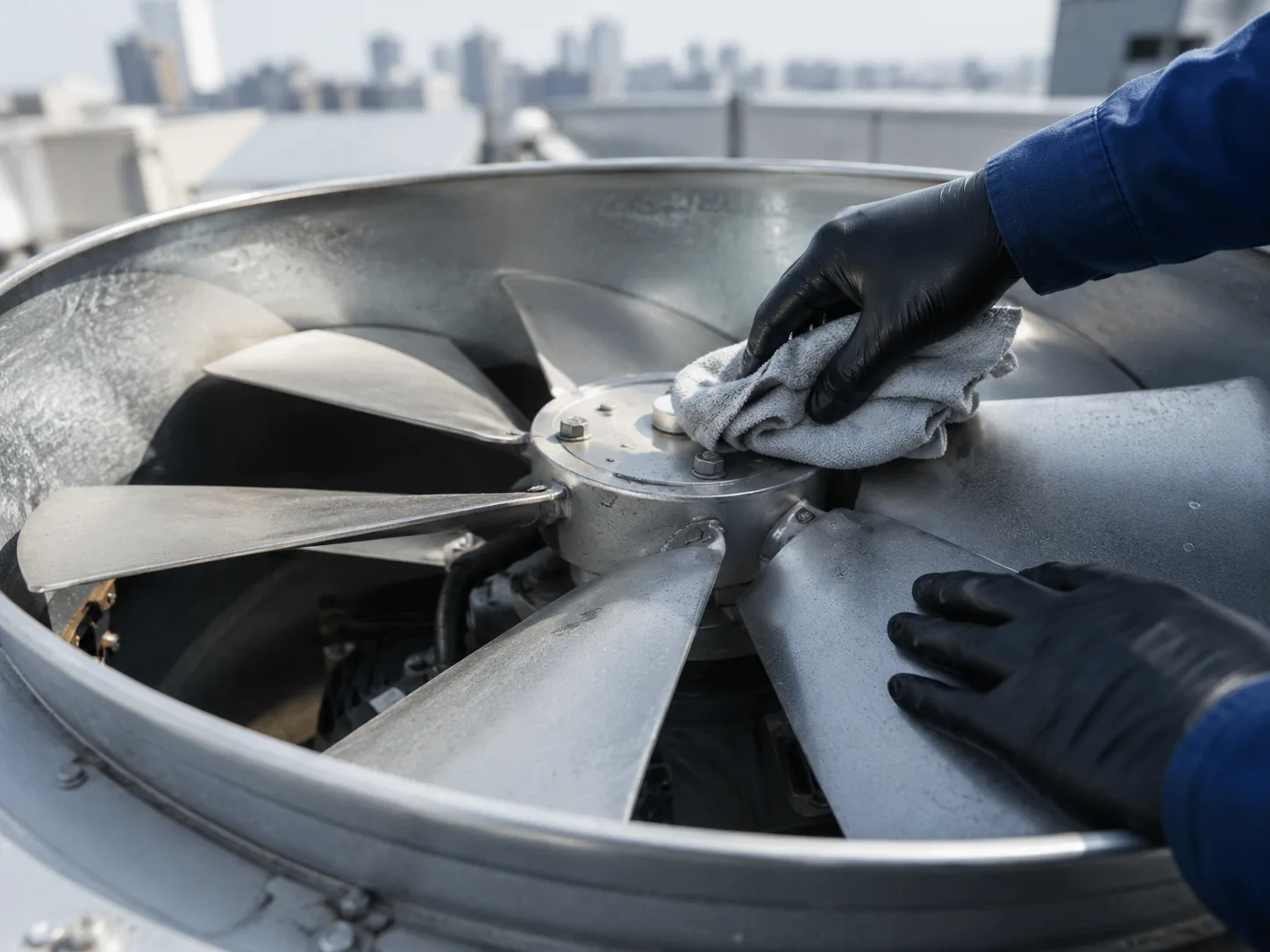
Kitchen smoky? Fan struggling? A grease-loaded fan can't pull air — we open it up, degrease it to bare metal, and flag anything mechanical we find.
Call now. Talk to a real person(647) 406-0474Signs your exhaust fan is grease-clogged
- Smoke rolling out of the hoodCapture is the first thing a loaded fan wheel loses. When smoke escapes the hood edge during normal service, the fan is no longer moving the air it was sized to move.
- Lingering cooking odorsLast night's fryer in this morning's dining room means the system isn't exchanging air. The fan creates the draw — when it's coated in grease, the whole system slows down.
- Kitchen runs hotThe exhaust pulls heat off the line along with the smoke. A struggling fan shows up as a cookline your crew can feel — and a cooling bill that keeps climbing.
- Grease staining the roofGrease pooling around the fan base is fuel sitting next to an ignition source, a slip hazard for anyone working up there, and a roof-membrane problem in the making.
What we do on a fan cleaning
- Open or hinge the fan for full access — wheel, blades, housing, and the duct connection behind it
- Degrease the fan wheel, blades, and housing down to bare metal
- Visually check belts and bearings, and flag any wear or damage in your service report
- Clean out the grease containment area around the fan base
- Document the work — dated record and photos for your compliance file
Why the fan matters under NFPA 96
NFPA 96 doesn't stop at the hood. The standard covers the entire exhaust pathway — hood, filters, plenum, ductwork, and the fan on the roof — and it requires the whole run cleaned to bare metal on a schedule set by your cooking volume. The fan is explicitly part of that system, and your required cleaning frequency applies to it the same as everything downstream of the filters.
There's a practical reason the standard bothers naming it. The fan is the engine of the system — every cubic foot of greasy air your kitchen produces passes through it, and grease condenses on the wheel and housing exactly the way it does in the duct. A contaminated fan is both the most likely place for your airflow to die and the last stop a duct fire makes before open roof air, with a grease-filled containment tray waiting beside it.
It's also where inspectors and cheap vendors part ways. The fan is out of sight on the roof, so it's the component a "hood-only" crew skips and the component a fire marshal climbs up to check. If your last service report has no fan photos, assume it wasn't touched — and assume the inspector will figure that out before you do.
Fan cleaning is part of a full system cleaning
If you're booking fan service because your cleaning interval came due, what you actually need is complete exhaust system cleaning — hood to fan in one visit, with the fan covered as part of the scope. Booking the fan separately on top of that is paying twice for the same metal.
Standalone fan cleaning earns its keep between scheduled cleanings: airflow has dropped off ahead of schedule, grease is showing on the roof, or an inspection called out the fan specifically. We'll tell you which situation you're in when you describe the problem — and if the fan turns out clean but the duct is the bottleneck, complete exhaust system cleaning covers the full path.
FAQ
Common Questions
Ready to Book Commercial Exhaust Fan Cleaning?
Tell us what you need and we'll get back to you fast. Quotes are always free.
Prefer to call?(647) 406-0474Mon–Sun: 7:00 AM – 9:00 PM
Documentation available with your quote.