
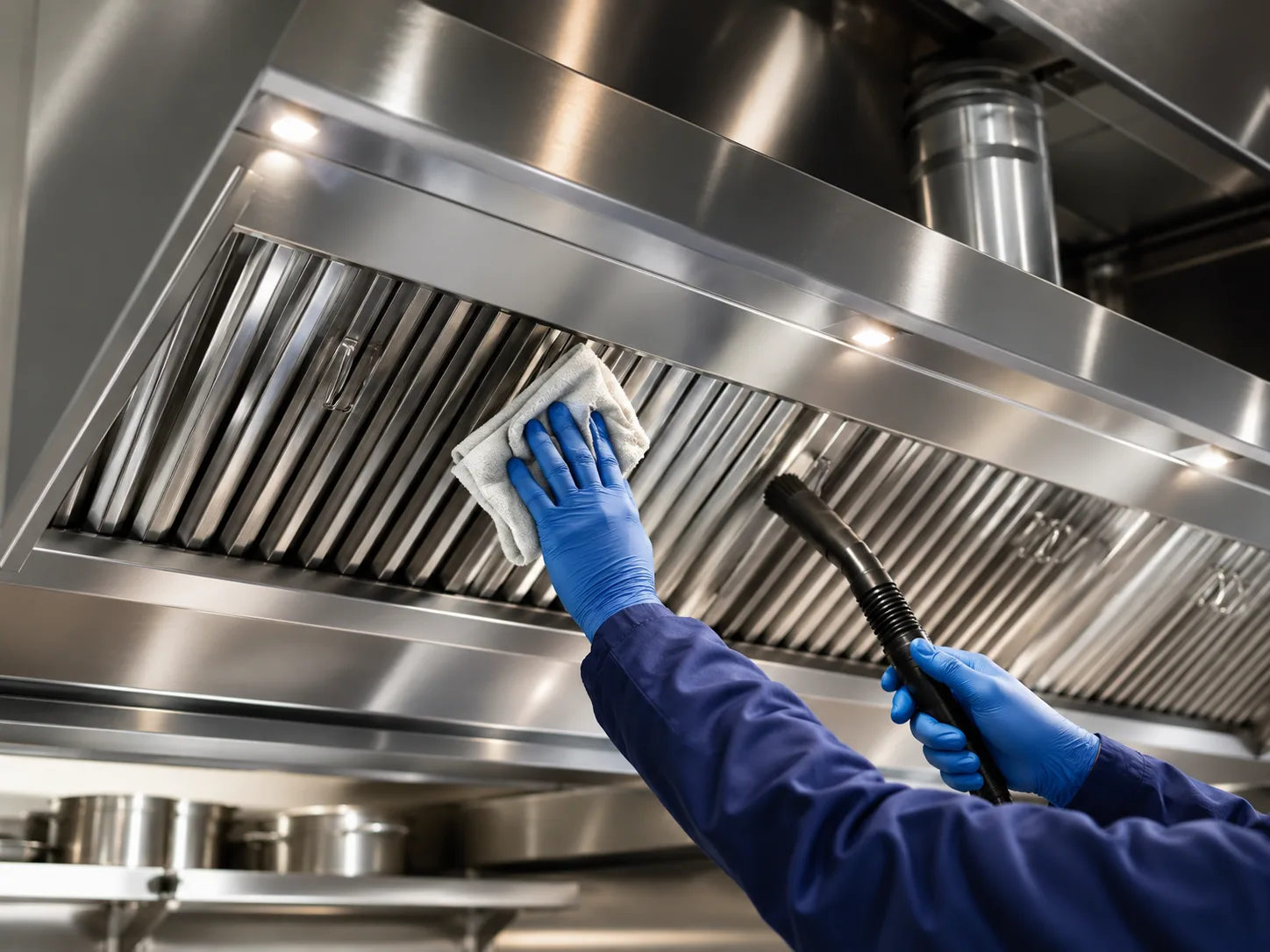
Hood & Exhaust Cleaning
Kitchen Exhaust System Cleaning
From the hood opening to the rooftop fan — ducts, plenum, and fan cleaned and documented to the NFPA 96 standard.
Call now. Talk to a real person(647) 406-0474The hidden risk in your ductwork
A spotless hood tells you nothing about the duct above it. Grease vapor travels the full length of the exhaust run before it leaves the building, and it condenses hardest where you can't see it — in the plenum, along horizontal duct sections, and up the vertical riser to the roof. When a cooking fire gets past the filters, that duct grease is what carries it between floors and into the structure.
It's also exactly what inspectors look for. Hood-only wipe-downs leave the system loaded above the filter line, and fire inspectors know it — they open access panels, measure grease depth, and check the fan and roof for staining. A kitchen can look immaculate from the floor and still get written up. Our fire marshal inspection checklist walks through what they check, point by point.
What gets cleaned at each stage of the system
Hood and filters. The canopy is degreased to bare metal and the filters are pulled, soaked, and scrubbed — or flagged for replacement if they're warped or burned through.
Plenum. The chamber directly behind the filters is the first place grease lands after it leaves the cooking surface. It gets scraped and degreased, not just rinsed.
Duct run. Every horizontal and vertical section is hand-scraped and degreased through access panels. Where the run has no panels, we add them — that's part of the job, not an excuse to skip sections.
Rooftop fan. The upblast fan is hinged open so the blades, housing, and grease containment area can be degreased — then the system goes back together pulling the way it was designed to.
How a full-system cleaning runs
- 1
Access panels
We locate every panel on the run and open the system end to end. Sections with no access get code-compliant panels cut in — quoted up front, never sprung on you after the work starts.
- 2
Scrape & degrease
Heavy deposits are hand-scraped first, then each duct section, the plenum, and the canopy are degreased down to bare metal. No chemical-only shortcuts on caked grease.
- 3
Fan service
The rooftop or upblast fan is hinged open, blades and housing degreased, and the containment area cleaned. Belts and bearings get a visual check, and anything mechanical we spot is flagged in your report.
- 4
Documentation
Photos at every stage, a dated sticker on the hood, and a written report that notes any areas that couldn't be reached — exactly what NFPA 96 expects the cleaning record to show.
Full-system cleaning vs. hood-only service
| Full exhaust system cleaning | Hood-only service |
|---|---|
| Hood, plenum, full duct run, and fan — the entire NFPA 96 system | Canopy and filters only |
| Access panels opened, or added where the run has none | Everything past the filter line stays untouched |
| Fan hinged open and degreased so airflow comes back to design | A grease-loaded fan keeps losing pull month after month |
| Photo documentation of duct interiors for your inspection file | No evidence of conditions above the hood |
FAQ
Common Questions
Ready to Book Kitchen Exhaust System Cleaning?
Tell us what you need and we'll get back to you fast. Quotes are always free.
Prefer to call?(647) 406-0474Mon–Sun: 7:00 AM – 9:00 PM
Documentation available with your quote.