
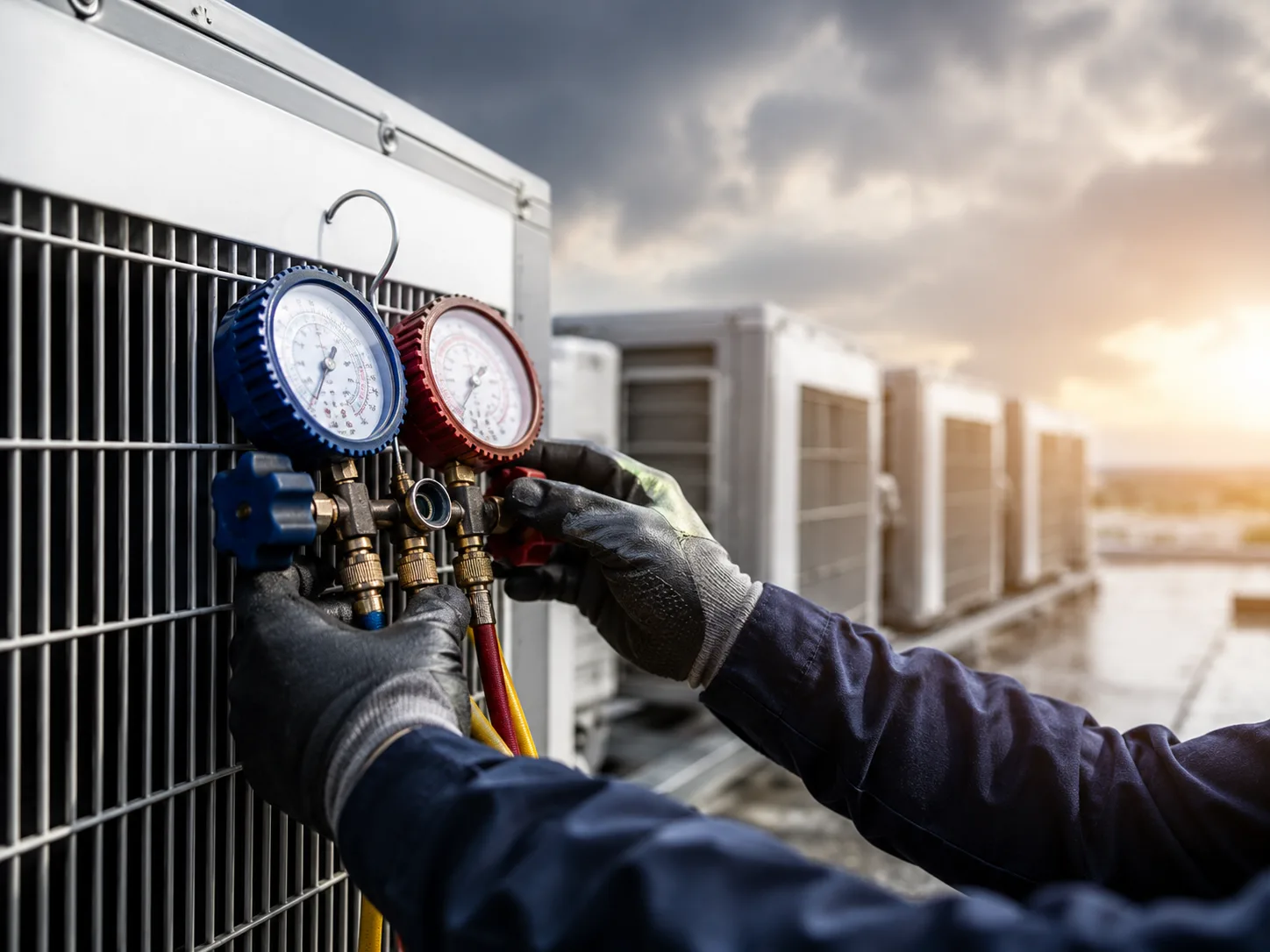
24/7 Emergency
24/7 Emergency HVAC Service
No heat, no cooling, or a commercial breakdown — call now and we'll triage on the phone. Emergency service is available 24/7.
Call now — talk to a real person(555) 555-0123What counts as an emergency
- No heat in freezing temperaturesPipes freeze long before the house bottoms out. If indoor temps are falling and the forecast is below freezing, this is a call-now job — day or night.
- No cooling in extreme heatHeat is a health problem before it's a comfort problem — babies, seniors, and anyone medically vulnerable overheat faster than the rest of the building notices.
- Water leaking from the unitShut the system off at the breaker first, then call. Water reaching live electronics escalates quickly, and every minute of runtime makes it worse.
- Commercial breakdown mid-serviceA dining room that won't cool, a kitchen losing its air, an office with no heat — a commercial space that can't hold temperature is losing money by the hour. (Walk-in cooler down? That's a refrigeration tech, not us — but if the building's HVAC failed, call.)
First, the safety rule. If you smell gas or a carbon monoxide alarm is sounding, skip everything below: get everyone out, and call your gas utility's emergency line or 911 from outside — before you call us or anyone else. Everything that follows assumes neither of those is happening.
While you wait: three quick checks
- Thermostat — right mode (Heat or Cool), set point past room temperature, fresh batteries if the screen looks faded
- Breaker — find the furnace or AC breaker at the panel; if it tripped, reset it once. If it trips again, leave it off and tell us
- Filter — a fully clogged filter can shut the system down on its own safety switch; pull it and tell us what you find
Those three checks end a surprising share of late-night calls without a truck ever rolling. If they don't bring the system back, stop there — modern equipment locks itself out for a reason, and the fault is behind sealed panels you shouldn't open. The full emergency what-to-do guide covers every check, what never to touch, and how to protect the building while you wait.
How emergency dispatch works
- 1
Call
A person answers, around the clock. Tell us what failed, when it started, and what you've already checked.
- 2
Triage on the phone
We rule out the simple fixes first — and tell you honestly if the problem can safely wait for a standard appointment instead of an emergency visit.
- 3
Tech dispatched
If it can't wait, a technician heads your way briefed on your failure description, so the diagnosis starts before the doorbell rings.
- 4
Upfront quote on arrival
You see the price and approve it before any work begins. No surprise math at 3 a.m.
Commercial emergencies
A house that won't cool is miserable. A dining room that won't cool is walkouts, refunds, and reviews — and a kitchen that loses its airflow mid-rush can't keep cooking. Commercial breakdowns get the same 24/7 line: rooftop units, makeup air, and the systems behind commercial HVAC for restaurants, offices, and storefronts. And if triage shows your problem is routine rather than urgent, we'll book it as standard furnace repair or AC repair instead — no reason to pay emergency attention for a daytime problem.
FAQ
Common Questions
Emergency? Don't Wait on a Form.
Call now and a real person will triage your problem on the phone — 24/7.
Mon–Sun: 7:00 AM – 9:00 PM • Emergency service available 24/7